Tradition as a Personal Value: Meaning, Examples, and Related Values
What Is Tradition as a Core Value?
Tradition preserves customs, rituals, and wisdom passed through generations. People high in Tradition protect continuity and identity through practice, especially in family life, community rituals, and shared cultural storytelling.
Why Tradition Matters
Honoring Tradition helps you:
- maintain cultural memory,
- stabilize identity across change,
- transmit hard-earned lessons,
- foster belonging through shared rituals.
How Tradition Shows Up (High vs. Low Expression)
High Expression
- upholds ceremonies and rites,
- honors elders and lineage,
- references history in decisions,
- preserves meaningful symbols.
Low Expression
- neglects heritage and roots,
- discards rituals without reflection,
- prizes novelty over continuity,
- severs intergenerational ties.
Common Challenges of High Tradition
- resistance to needed change,
- gatekeeping innovation,
- exclusion of nonconformists,
- romanticizing the past.
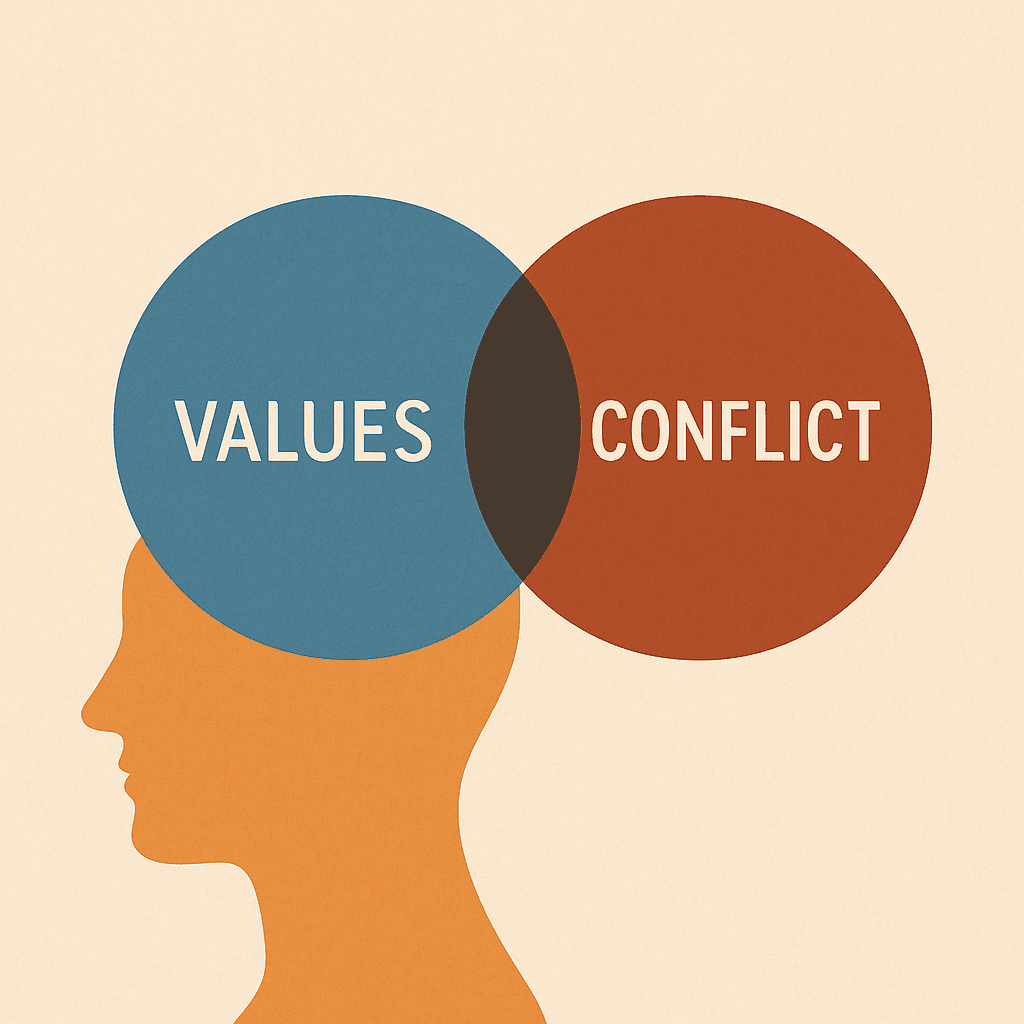
Tradition in Conflict With Other Values
Tradition vs. Creativity
Creativity changes forms and norms; Tradition preserves them.
Tension: inventive evolution vs. continuity.
Tradition vs. Variety
Variety seeks constant novelty; Tradition repeats meaningful patterns.
Tension: novelty churn vs. ritual repetition.
Examples of Tradition in Daily Life
- Maintaining holiday rituals with family.
- Recording and teaching ancestral recipes.
- Incorporating historical context into policies.
- Supporting cultural festivals.
Strengths and Risks of Tradition as a Value
Strengths
People who value tradition remain faithful to the rituals repeated for centuries. They can appreciate the cultural achievements of previous generations.
Risks
Sometimes too much attachment to tradition can stand in the way of broadening your horizons.
From the Global Values Research
How often people rank Tradition
Across the 2,099,004 assessments completed on personalvalu.es since 2020.
- Appearance rateof assessments rank it in their ten. 59th of 62 values.
- 4.9%
- First placeof assessments put it first. 55th of 62 on this measure.
- 0.3%
- Top threeof assessments put it in the top three. 21% of those who rank it.
- 1.0%
- Average positionis its mean position, out of ten, where it is ranked at all.
- 6.2
Tradition is ranked less often with age, from 5.3% among participants under 18 to 4.7% among those 65 and over. Men rank it more often than women, at 4.8% against 3.4%.
Age and gender from the assessments of December 2025 to September 2026 whose participants gave them.