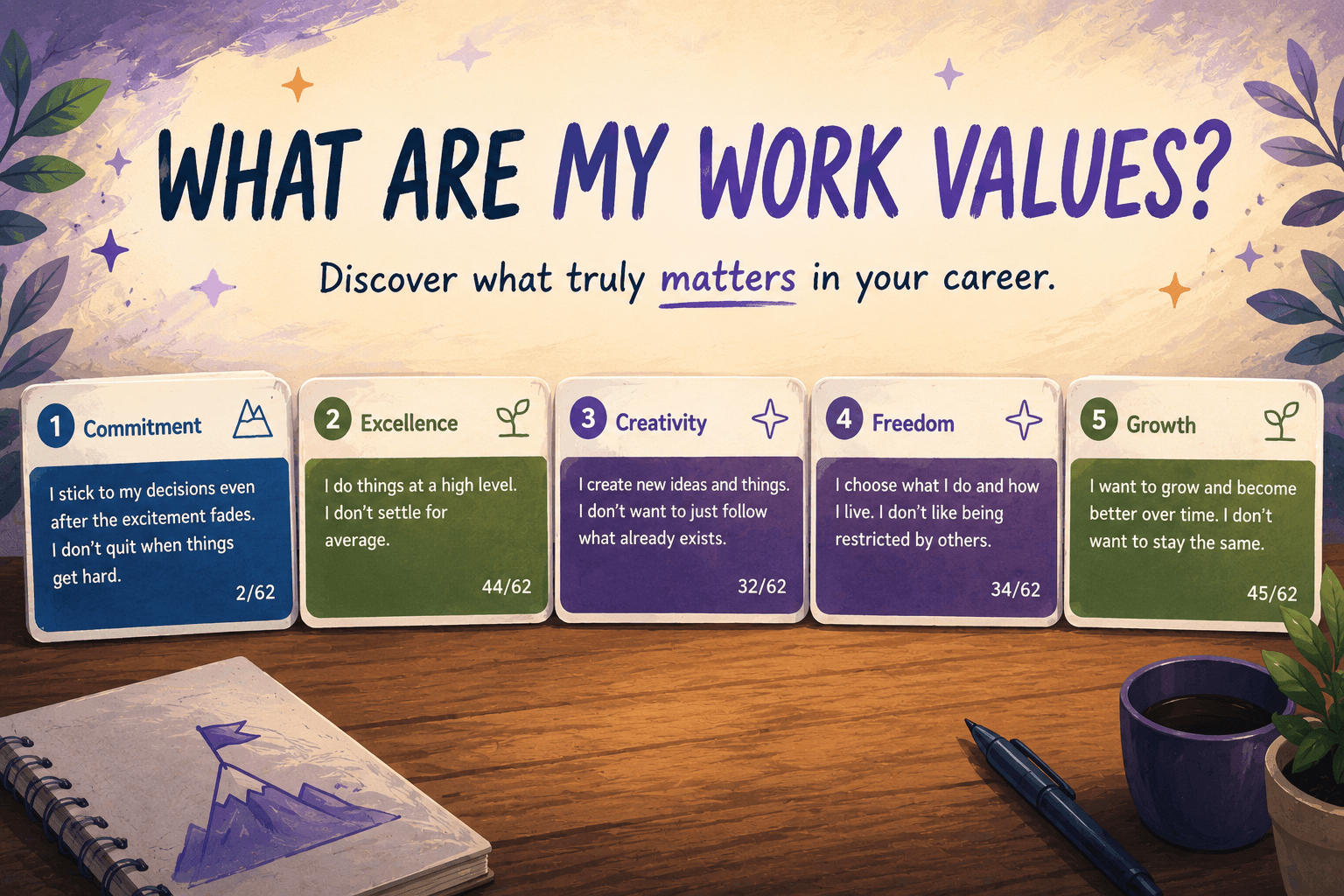
Independence
I rely on myself to handle things. I don’t depend on others.
35/62
Independence as a Personal Value: Meaning, Examples, and Related Values
What Is Independence as a Core Value?
Independence values self-reliant decision-making and minimal obligation to external control. People high in Independence design systems that preserve autonomy.
Why Independence Matters
Honoring Independence helps you:
- avoid unhealthy dependence,
- adapt rapidly without approvals,
- preserve authenticity of choices,
- build personal resourcefulness.
How Independence Shows Up (High vs. Low Expression)
High Expression
- negotiates flexible terms,
- learns skills to reduce reliance,
- limits binding commitments,
- resists coercive oversight.
Low Expression
- defers decisions habitually,
- seeks constant validation,
- over-indexes on permission,
- fears solo ownership.
Common Challenges of High Independence
- difficulty accepting help,
- underutilizing collaboration leverage,
- perceived aloofness,
- slower scaling by working alone.
Independence in Conflict With Other Values
Independence vs. Teamwork
Teamwork integrates shared decisions and joint execution; Independence favors solitary direction.
Tension: collective coordination vs. autonomous action.
Independence vs. Loyalty
Loyalty deepens long-term bonded obligations; Independence preserves optionality.
Tension: enduring allegiance vs. flexible detachment.
Examples of Independence in Daily Life
- Building multiple income streams.
- Learning technical basics instead of outsourcing.
- Structuring remote/time-flex work agreements.
- Setting personal boundaries on mandatory meetings.
Strengths and Risks of Independence as a Value
Strengths
Independent people trust their own choices the most. They can solve problems on their own. They value freedom of action very much.
Risks
Trusting someone else can be problematic and create feelings of insecurity.