Love as a Personal Value: Meaning, Examples, and Related Values
What Is Love as a Core Value?
Love emphasizes deep affection, care, and emotional bonding. People high in Love invest in nurturing, expressive relationships and compassionate presence that grow richer through consistent attention and shared experiences.
Why Love Matters
Honoring Love helps you:
- strengthen attachment security,
- support healing and resilience,
- experience profound meaning,
- anchor values in empathy.
How Love Shows Up (High vs. Low Expression)
High Expression
- expresses appreciation openly,
- protects emotional safety,
- invests time in intimate connection,
- shows consistent warmth and steady commitment.
Low Expression
- withholds affection defensively,
- avoids emotional vulnerability,
- treats relationships transactionally,
- prioritizes tasks over connection.
Common Challenges of High Love
- emotional overextension,
- difficulty separating healthy boundaries,
- susceptibility to codependence patterns,
- pain during relational loss.
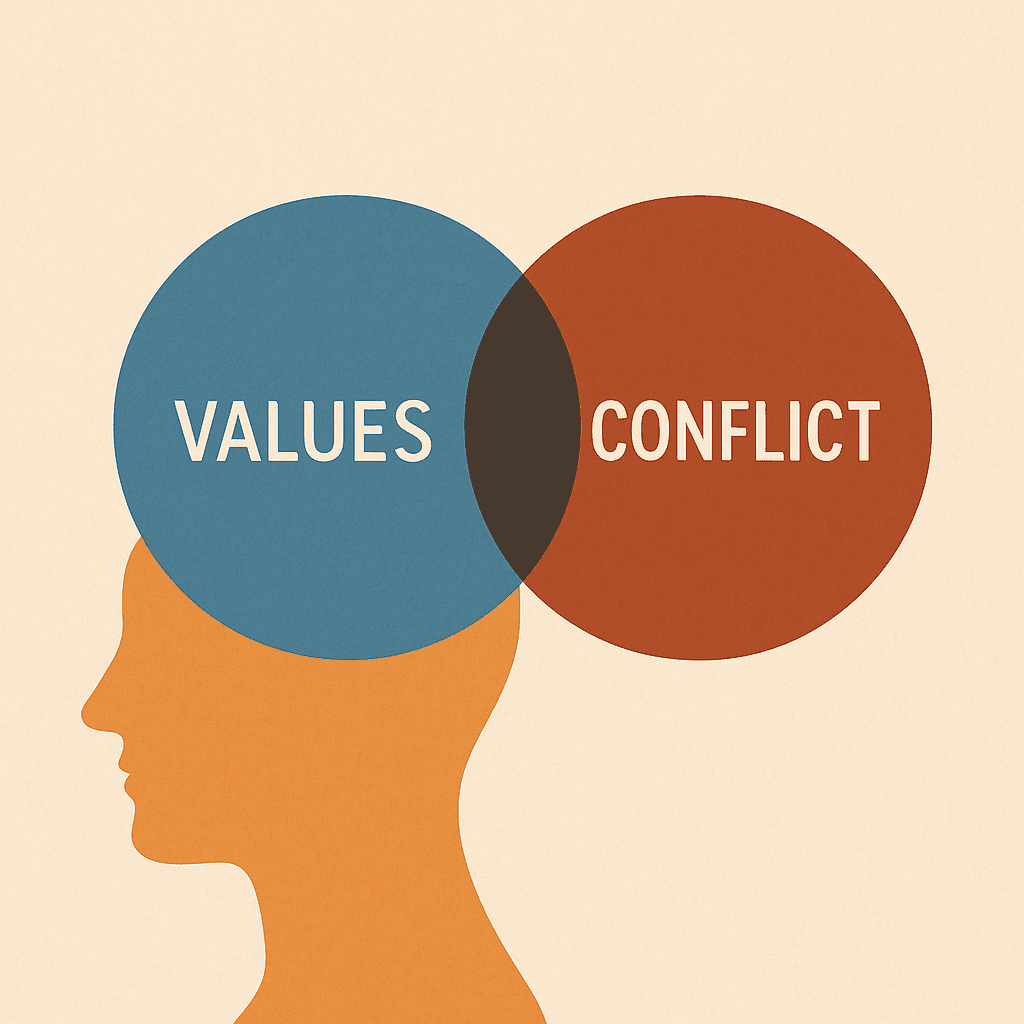
Love in Conflict With Other Values
Love vs. Independence
Independence preserves autonomy; Love invites interdependence.
Tension: self-sufficiency vs. shared emotional reliance.
Love vs. Wealth
Wealth focuses on material accumulation; Love centers relational richness.
Tension: resource maximization vs. affection prioritization.
Examples of Love in Daily Life
- Writing heartfelt notes of appreciation.
- Prioritizing presence during a partner’s stress.
- Offering unconditional emotional support.
- Maintaining affectionate daily rituals.
Strengths and Risks of Love as a Value
Strengths
The feeling of love is often a strong motivation for action and change. It can bring out the noblest qualities in a person.
Risks
Strong feelings and intense emotions can sometimes be difficult to control. Rational thinking is then pushed into the background.
From the Global Values Research
How often people rank Love
Across the 2,099,004 assessments completed on personalvalu.es since 2020.
- Appearance rateof assessments rank it in their ten. 6th of 62 values.
- 32.5%
- First placeof assessments put it first. 3rd of 62 on this measure.
- 4.8%
- Top threeof assessments put it in the top three. 42% of those who rank it.
- 13.5%
- Average positionis its mean position, out of ten, where it is ranked at all.
- 4.6
Love is ranked less often with age, from 35.6% among participants under 18 to 28.0% among those 65 and over. Women rank it more often than men, at 35.7% against 28.0%.
Age and gender from the assessments of December 2025 to September 2026 whose participants gave them.